08
September 2025
Improve Air Quality in Hotel & Restaurant Kitchens: Exhaust & Fresh Air Benefits
- By Admin
- 0 Comments
- 08/09/2025
Breathing Easy: Why Superior Ventilation is the Secret Ingredient for Your Kitchen
In the cutthroat industry of hospitality, we are absolutely fixated on the "front of house" experience—the lighting, the music, the presentation. But the most important part of the guest experience (and a well-run kitchen) is the one that is least visible: the air.
Your commercial kitchen is a high-output factory of heat, grease, smoke, and moisture. It is a liability instead of an asset if you don’t have a sophisticated air management plan in place. Here’s why balancing your exhaust and fresh air systems is the key to success.
The Physics of a Professional Kitchen
To understand air quality, think of the kitchen as a pressurized system. Every cubic foot of air that you pull out via the exhaust hood has to have a new place to go. This is the fine line between Exhaust and Make-Up (MUA) Air.
1. The Exhaust System:
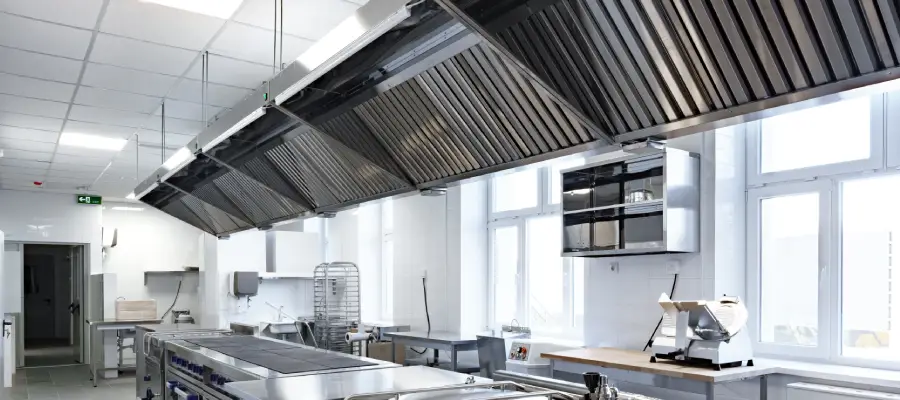
The Heavy Lifter Your first line of defense is the exhaust hood. Its primary role is to snare effluent — the cocktail of grease-laden vapors, steam and carbon monoxide that cooking creates. Grease Mitigation
Grease Mitigation: High-effi ciency filters capture particulates on their way to the ductwork, therefore minimizing the potential for a fire.
Heat Evacuation: Commercial ranges can become mind-bogglingly hot. Exhaust systems ensure that the kitchen does not turn into a “hot box,” protecting employee health and expensive refrigeration equipment.
2. Fresh Air (Make-Up Air): The Unsung Hero
If you remove the air without replacing it, you will create negative pressure. This causes "back-drafting," where the exhaust fan has a hard time fighting the vacuum, and the smells from the kitchen start to enter the dining area.
Air Quality Control: Fresh air systems are used to dilute indoor air pollutants and maintain a stable oxygen level for employees working long hours.
Temperature Regulation: Modern Make-Up Air Units (MAUs) have the ability to pre-condition the air, either heating it in the winter or cooling it in the summer, before it reaches the kitchen line.
Top Benefits of Improving Your Air Quality
Enhanced Staff Retention and Productivity
Kitchen work is hard. When a chef is fighting temperatures of 100°F and breathing smoke, exhaustion follows, and errors occur.
Cognitive Function: Research indicates that lower CO2 concentrations and improved airflow are directly linked to improved mental function.
Comfort: A well-balanced “thermal envelope” helps employees stay cool — a goal that is important in an industry where talent is scarce.
Optimized Guest Experience
Optimized Guest Experience You know when youre at a nice restaurant and you get the smell of burnt onions or cleaning solutions drifting into the dining room?
Tacking Pressure: Keeping the kitchen slightly negative as compared to the dining area allows air into the kitchen and odours trapped where they belong.
Maintenance: The Key to Longevity
A world-class ventilation system is only as good as its last cleaning. To maintain peak air quality:
Daily: Wipe down hood surfaces and check filters.
Weekly: Deep-clean baffle filters to prevent grease buildup.
Quarterly/Bi-Annually: Professional duct cleaning to meet NFPA 96 standards and ensure fire safety.
Conclusion
But improving the air quality in your hotel or restaurant kitchen is more than just a regulatory requirement or a "smell" issue it's an economic imperative. Cleaner air means happier chefs, delighted customers, lower energy costs, and a safe building.
In today’s culinary environment, the most successful restaurateurs understand that what happens in the air is as important as what happens on the plate. Sri Hari Kitchen Equipment for more information.